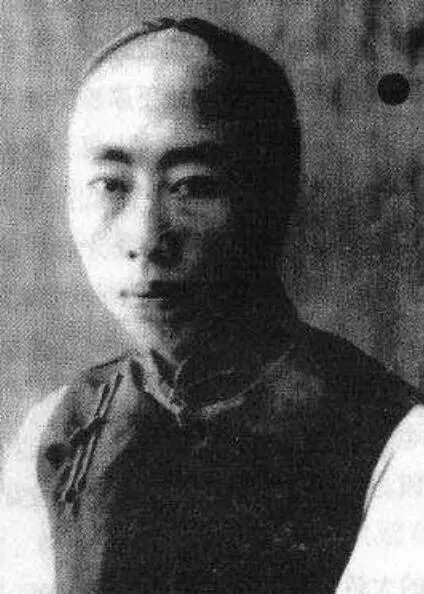
Pujun (, 5 January 1886–1942) was a Qing dynasty imperial prince of the Aisin-Gioro. He was the second son of Zaiyi, Prince Duan. Zaiyi sided with Empress Dowager Cixi and opposed the Hundred Days' Reform movement initiated by the Guangxu Emperor and his allies. On 22 September 1898 Cixi launched a coup d'état and put Guangxu under house arrest in the Summer Palace. Shortly after the coup d'état Guangxu's health began to decline, prompting Cixi to name an heir presumptive.
Three princes were considered as potential candidates: Pujun, the second son of Prince Duan; Zaizhen, the eldest son of Prince Qing; Puwei, the eldest son of Prince Gong. Finally, Cixi chose Pujun as the heir presumptive. On 24 January 1900, Pujun was titled the "First Prince" (大阿哥) and officially recognized as an adoptive son of the deceased Tongzhi Emperor, thereby he would have the legitimacy to inherit the throne. There were rumors that Cixi plan to depose the Guangxu Emperor and replace him with Pujun.
In the same day Cixi issued a decree to the cabinet that Pujun would offer sacrifices to heaven and ancestors on behalf of the emperor in the next Lunar New Year (31 January 1900). However, this decision was not popular with Chinese bureaucrats. On 27 January 1900, Jing Yuanshan (經元善), the director-general of the Shanghai Telegraph Administration, sent a telegram, asking Guangxu to "handle court affairs though you are ill, don't think about abdicating the throne." (力疾臨御,勿存退位之思) The co-signers were Ye Han, Ma Yuzao,
Zhang Binglin, Wang Yinian, Ding Huikang and Shen Xin.


 Sign in with Google